Showing posts with label advice. Show all posts

Saturday, October 25, 2014

10 Ways to Snug Up Your Bedroom

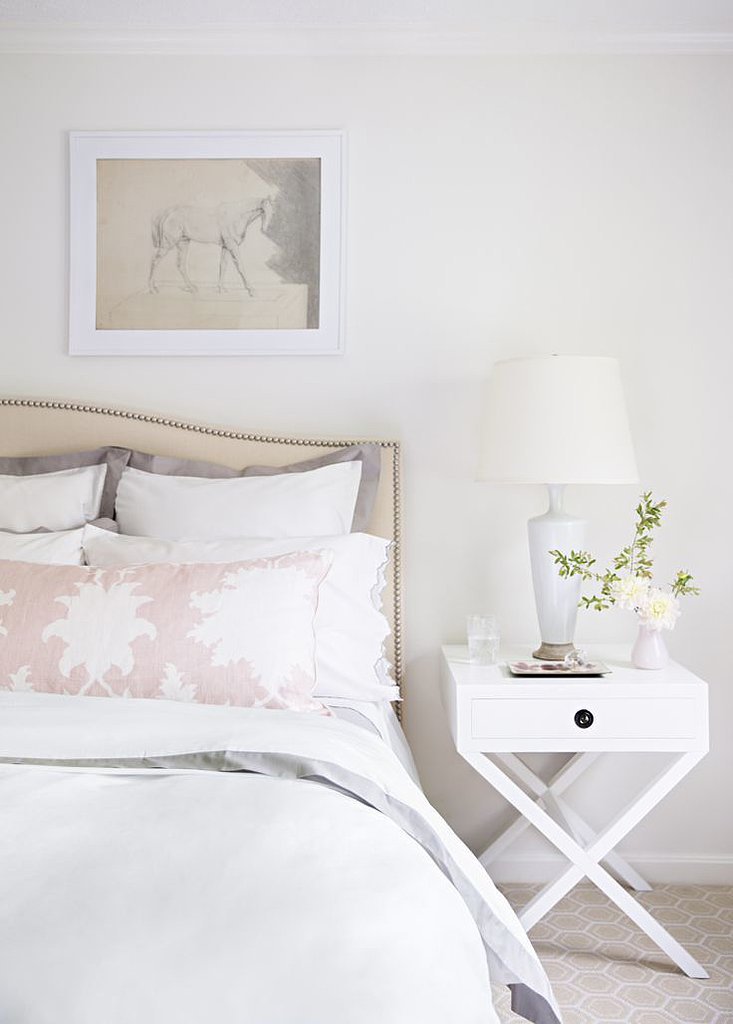
What’s better on a crisp fall weekend morning than grabbing a cup of hot coffee and something to read and returning to a cozy bed? Make your bedroom the snuggest place around by layering rugs, blankets, twinkling lights, plump cushions and piles of books. You’ll probably have to get up eventually, but until then, here are 10 ideas to make your room perfect for snuggling in.

Thursday, October 23, 2014

Fall Landscaping, for Beauty and Profit

With the fall season fully upon us in the Bay Area, any landscaping projects that you haven’t already started will have to wait until spring, right?
Landscaping
Wrong. Landscape professionals say that autumn is the perfect time to plant bulbs and prepare your yard for the coming spring and summer. And if you’re thinking of selling your house in the coming months, you shouldn’t wait until spring to make sure the yard is in tip-top shape.
In fact, researchers at Virginia Tech found that upgrading a home’s landscape from “average” to “excellent” can raise its overall value by 10 to 12 percent.

A $150,000 home with no landscaping could fetch an additional $8,300 to $19,000 by adding a landscape with color and large plants, according to a report from the school’s Department of Horticulture. And the bonus increases exponentially for higher-priced homes.

“The most preferred landscape included a sophisticated design with large deciduous, evergreen, and annual color plants and colored hardscape,” according to the report. Adding different plant sizes to a front yard, for example, can boost curb appeal, as can mixing fruit trees and flowers for added color.
Design sophistication is the most important consideration, followed by plant size and diversity of plants.

“Survey results showed that relatively large landscape expenditures significantly increase perceived home value and will result in a higher selling price than homes with a minimal landscape,” the report noted. “The resulting increase in ‘curb appeal’ of the property may also help differentiate a home in a subdivision where house styles are similar and thereby attract potential buyers into a home.
“This advantage is especially important in a competitive housing market,” the report concluded — as if it had been written especially for Bay Area homebuyers and sellers.

Looking for more landscaping tips? Check out the website of the Professional Landcare Network, the national trade association for landscape professionals. It offers a full page of fall landscaping tips.

(Image: Flickr/Andrea_44)
 

Tuesday, August 5, 2014

Taking a Vacation? Make Sure Your Home Is Secure.

 FBI statistics show that home burglaries jump 10 to 18 percent during the summer months, when families are more likely to be away on vacation. Perhaps you’ve read lists of home-security tips before, but they bear repeating — in part because today’s modern lifestyle offers a wealth of new opportunities for burglars.

Not all burglars are careless opportunists, after all. Some make the effort to monitor social notes in online forums and scan messages and photos posted to social-media outlets.

Don’t give burglars a head start by revealing vacation plans on your blog, and don’t post those happy vacation photos on Facebook, Instagram, or Twitter until you’re back home. And make sure your kids don’t, either.

Modern amenities can be your friend, too, of course. Consumer Reports recently tested digital products that let you
monitor your home from far away. One product lets you control lights remotely, and another, a stationary generator, sends email or text messages if a problem surfaces during periodic self-tests.

Simpler devices such as Wi-Fi-enabled burglar alarms, converted nanny-cams, motion-sensor floodlights, and electronic door locks are available at most hardware stores.

There are plenty of low-tech ways to jeep your home secure, too. Perhaps the simplest is to notify a trusted neighbor or friend to keep an eye on the place regularly, and perhaps park a car in the driveway from time to time.

Landscaping, too, can play a role in home security. Prune shrubs around your home to no higher than three feet off the ground, and trim trees so that the lowest branches are at least six feet up. That way there will be fewer spots for a criminal to hide.

While you’re surveying the scene outside, remember to remove that spare key you have hidden under the flower pot on the porch. It’s the first place a burglar will look. (Second place: under that rock just off the porch.) Also, remember to stop mail and newspaper delivery and, for heaven’s sake, lock the doors and windows before you leave. Police say you’d be amazed how often vacationers forget to do that.

The San Francisco Police Department’s website has links to several home-security tip sheets, downloadable as PDF files, prepared by the California Attorney General’s Office. One is geared
specifically for vacationers, with dozens of pointers for preparing your home before you leave and staying safe when you’re off on an adventure. Another is a comprehensive Home Security Handbook, with a 34-point checklist of possible entry points for burglars.

The handbook offers a sobering perspective:

“Most home burglaries are done by opportunists who spot an open window, a faulty lock or a house that looks like no one’s going to be around for a while. In California, nearly one-third of all burglaries are classified as ‘no-force entries’ because the burglars simply walked in through an unlocked door or climbed in an open window.”


(Image: Flickr/Ken Dodds)

Thursday, July 10, 2014

Statistics Reveal ‘Typical’ California Homebuyer

The typical California homebuyer is 48 years old and an ethnic minority, with a college degree and a household income of more than $100,000.houseglass
Those statistics come from the California Association of Realtors’ latest annual survey of homebuyers, conducted in the first quarter of 2014. The survey found that the average homebuyer today is the oldest in at least 12 years, climbing from 35 in 2012 to 38 in 2013 to 48 in 2014. By ethnicity 36 percent of buyers are white, with Hispanics and Asian/Pacific Islanders each accounting for 26 percent of the total and blacks accounting for 12 percent.
Measured by household income, 17 percent of buyers reported an annual income of more than $200,000, with 27 percent earning $150,000 to $199,999 and 27 percent bringing home $100,000 to $149,999. Twenty-five percent of buyers are paid $75,000 to $99,999 per year, while only 3 percent earn $50,000 to $74,999.
In the Bay Area, only 22 percent of residents could afford to buy a home in the first quarter of 2014, a huge drop from two years ago, when 45 percent of residents could afford a property. The minimum household income needed to join the ranks of Bay Area homeowners was $140,977 in Q1 2014, up 56 percent from Q1 2012.
Other statistics from the CAR report:
  • Previous homeowners accounted for 59 percent of buyers in 2014, with 40 percent previous renters and 2 percent living most recently with their parents.
  • All buyers viewed at least 10 homes before buying; 56 percent viewed 20 or more.
  • The percentage of first-time buyers peaked at 54 percent in 2012. It slipped to 42 percent in 2013 before plunging to just 12 percent in 2014.
  • Buyers moved a median distance of 15 miles from their previous home.
  • Nine out of 10 buyers made offers on previous homes.
  • Fully 54 percent of buyers reported that they bought their home because of a price decease.
  • Similarly, 54 percent of buyers said they are fully satisfied with their purchase, while 46 percent said they selected the best option given the limited supply of homes. A year earlier, 66 percent said they were fully satisfied.
  • Buyers said they plan to keep their current homes for an average of 8.8 years, up from 6 years in 2013.
(Image: Flickr/Mark Moz)

Tuesday, June 17, 2014

Coming in 2015: No-Surprise Mortgage Closings

Mortgage closings should become easier, and more transparent, when new federal regulations take effect next year.
Yellow road sign bearing the word "MortgageAmong the revisions, lenders will no longer be able to make last-minute changes to closing documents such as imposing a higher interest rate, changing the loan product, or adding a prepayment penalty to the loan. The regulations specify that homebuyers must receive any new disclosures at least three business days before the closing.
The mortgage guidelines, set to take effect in August 2015, were written by the Consumer Financial Protection Bureau and are intended to be easier for borrowers to understand by providing them more time to ask questions and compare costs.
In a related move, the CFPB in January launched an inquiry into homebuyers’ mortgage complaints. The agency quickly identified four “pain points” in the process:

1. Too little time to review documents: Buyers complained that they don’t get vital paperwork until they arrive at the closing table, where there is pressure to rush through and repeatedly sign documents – without ample time to make sure that they understand what they are signing.

2. Huge stack of paperwork: Buyers said there are too many pieces of paper to examine, making the closing process overwhelming. As a result, many buyers leave the table with a lingering sense that something hidden in all those documents might adversely affect their financial solidarity.

3. Documents difficult to understand: Buyers said closing documents are full of hard-to-understand terminology, and that they could use additional help from others in the closing room to fully understand them.

4. Document gaffes: Errors in closing documents can often lead to delays. Even seemingly minor glitches, such as a misspelled name or forgetting to include a spouse, require closing agents to overhaul the package.

As a result of that inquiry, the CFPB  started work on an “eClosing” pilot program that would move much of the closing process online.
The program, still in the testing stage, would provide buyers with digital tools that explain key terms and important documents, give them more time to review mortgage documents, and make it easier to spot any errors beforehand.
“We strongly believe that electronic closing solutions, known as eClosings, can lead to more knowledgeable consumers and a much better process for everyone involved,” CFPB Director Richard Cordray said in a recent statement.

However, the new guidelines and the eClosing program won’t take the place of homebuyers’ research. From choosing a lender to signing the closing papers, buyers need to take advantage of all the tools available to make the smartest decision.


(Image: Flickr/401(K) 2012)

Tuesday, June 3, 2014

Curb Appeal Starts With a Smartly Painted Home

Preparing to put your home on the market? Recall the proverb “first impressions are the most lasting” and then start looking at paint swatches.
Paint swatches 
It’s the essence of curb appeal: A smartly painted home will catch the eye of a prospective buyer before anything else. But whether you hire professionals or tackle the job yourself, an exterior paint job requires plenty of forethought, from color selection to type of paint.

Most design professionals recommend a color scheme that blends in with neighboring homes, although sometimes the opposite works well, too. San Francisco homes, after all, are world-famous for their bold combinations of up to a half-dozen colors, shades, and hues.

According to paint manufacturer Sherwin-Williams, white or a light color can make a house appear larger and the lot seem smaller. Dark colors can make a home look smaller but more substantial.
Homeowners can scale down height by painting the upper portion of a tall house a deeper tone than the bottom portion. If a house sits far from the curb, painting it a light color will visually bring it forward.

Sherwin-Williams also advises that you consider the landscaping around your home — tress that change color, flowering shrubs, and flower gardens — for color compatibility. Note that the shade from trees on a heavily wooded lot will make colors look darker.
Looking for color suggestions? Sherwin-Williams’ website offers a mix of up-to-date color palettes based on themes such as “Suburban Modern,” “America’s Heritage,” and “Northern Shores & Seaports.”

Other paint manufacturers also offer color advice, of course: Glidden presents 15 modern palettes, each with four complementary colors, and  Benjamin Moore presents its “New” Neutral Palette for 2014. Behr groups its exterior paints by temperature — cool, neutral, and warm — and also suggests colors by architectural style: Craftsman, Modern, Spanish Mediterranean, and Victorian Tudor, to name a few.

Whether you buy its paint or not, the Behr website also has a helpful how-to section on exterior painting, with advice on paint selection; home preparation; proper application; and repairs and cleaning.

The National Association of Realtors’ HouseLogic website also offers smart advice on how to prep and paint the outside of your home. A separate page on the website discusses the pros and cons of various types of paint: acrylic, oil-based, and stains. HouseLogic also presents valuable information on “green” painting, with eco-friendly tips and a suggestion to use “low-VOC” paints — those with exceptionally low levels of volatile organic compounds.

Feeling weighed down with decisions to make? The HouseLogic site will also make you smile. Or cringe. Check out its “Wacky Exterior Paint Jobs” page for some unique approaches to exterior painting.

How unique? Imagine a Hello Kitty-themed design and color scheme.
(Image: Flickr/+KV)

Thursday, May 15, 2014

A Reminder to Homebuyers: Annoy Sellers at Your Peril

Prospective buyers would do well to remember that they won’t get any closer to their goal of home ownership by annoying sellers.home sale contract
This may seem an obvious point, but real estate professionals say buyers irritate sellers time and again. Transgressions range from failing to comply with a request to remove shoes while indoors on a rainy day to failing to call well in advance when canceling a scheduled walk-through.
Don’t forget that until the deal actually closes, the seller holds the ultimate trump card: the home itself. And it’s a seller’s market nowadays, particularly in the Bay Area, where single-family-home inventory has been constrained for the past year.
A recent article on Bankrate.com, a website that aggregates financial data, notes that “a little give-and-take is normal, but some buyers push the envelope, as well as the sellers’  buttons.” The article goes on to list eight ways that homebuyers may annoy sellers and jeopardize a purchase:
Skipping appointments: Failing to show up for a scheduled appointment, or canceling at the last minute, is simply rude; the seller may have spent half a day making the house spic-and-span for the visit. Unless there’s a last-minute emergency, buyers must show up on time.
Disregarding house rules: If you (the buyer) are touring a home, remember that it’s not yours (yet). Take your shoes off inside, if requested, don’t let children run amok, and respect the wishes of the seller.
Nitpicking: If you don’t like something in the house, but it’s not a negotiable flaw, be quiet about it while touring the property. Some sellers may secretly install cameras or microphones to listen in on conversations, so save any catty remarks for the car ride home.
Presenting a long list of flaws: Using a laundry list of perceived defects as a negotiating tool could backfire and make a seller wonder whether the buyer is seriously interested. The seller is more concerned with the bottom line than a buyer’s critical observations.
Requesting multiple visits: As a sale approaches closing, sellers are busy making repairs, packing up, and moving. They don’t have time to accommodate a buyer’s repeated requests to come in, look around, and ruminate on future plans.
Renegotiating after reaching a deal: Barring any surprises from a home inspection, the negotiated price should be the final price.
Generating ‘iffy’ commitment letters: You can understand where a seller would get nervous if, after an agreement has been reached, the buyer’s lender steps in with a letter asking the buyer to confirm his or her credit-worthiness. Save everyone a panic attack by securing the loan beforehand.
Speeding up the closing date: It’s understandable that an anxious buyer may want to move up the closing date, but the seller needs time to pack up and move out. An extra ounce of courtesy is always appreciated.


(Image: Flickr/Pall Spera Co.)
 

Thursday, May 8, 2014

Down Payments Declining in Changing Mortgage Scene

Good news for homebuyers: Average down payments are declining, a sign that lenders are serious about easing  home-loan requirements.greendown
Many buyers assume they need to put down at least 20 percent of the purchase price in order to qualify for a loan, but the average down payment for a 30-year, fixed-rate mortgage in the first quarter of 2014 was 15.78 percent, according to data compiled by LendingTree. That’s down from 16.01 percent in the fourth quarter of 2013.
Also, average credit scores for LendingTree customers dropped 6 percent year over year, suggesting that lenders are more willing to consider a wider pool of borrowers.
“As the housing market improves and refinance activity declines, lenders are adapting their guidelines to improve credit accessibility for borrowers,” Doug Lebda, LendingTree founder and CEO, said in a statement.
“Relaxed lending guidelines translates to a larger pool of qualified homebuyers that could boost the housing recovery,” Lebda said. “While lenders still need proof that a borrower has the financial ability to repay the loan, lenders have started to accept lower down payments and credit scores from potential borrowers.”
Average down payments by state in the first quarter ranged from 12.31 percent in North Dakota to 19.36 percent in New Jersey. Unsurprisingly, California residents dropped the third largest down payments in the U.S. — 18.21 percent — slightly lower than buyers in New York, who put down an average of 18.54 percent.
The LendingTree data supports another recent study that found lenders have lowered borrowers’ minimum FICO credit scores and debt-to-income ratios over the past year to attract more business.
First-time buyers, who generally face the closest scrutiny from lenders, would do well to talk with a real estate professional for help finding a lender and prequalifying for a home loan before entering negotiations with a seller.
If you plan to buy a home in the Bay Area or the Tahoe/Truckee region, Pacific Union’s mortgage partner, Mortgage Services Professionals, can offer loan advice and consultation to help make your purchase a success. 

Tuesday, April 29, 2014

Real Estate Tops Gold as Best Long-Term Investment

Real estate ranks ahead of gold, stocks, bonds, or savings accounts as the best long-term investment today, according to a nationwide poll by the Gallup organization.
Survey iconThirty percent of Americans named real estate their best investment option in the poll, which was conducted earlier this month. Real estate has been rising steadily in Gallup’s annual investment polls since 2011, when only 19 percent of Americans viewed it favorably.
Rising home prices and growing stability in real estate markets are credited for much of the change in perception.
Gold was the No. 1 investment option in 2011, when 34 percent of poll respondents named it their favorite. Gold was at its highest market price at the time, but prices have dropped significantly since then.
In the latest poll, gold and stocks tied for second place behind real estate, at 24 percent, followed by savings accounts (14 percent) and bonds (6 percent).
Real estate has ranked first among investment options in previous years — 50 percent of poll respondents picked it as their top choice in 2002, as markets boomed — but it fell out of favor during the subprime mortgage crisis and recession.
Real estate’s recovery has been underway for more than a year, with Bay Area markets at the national forefront. The San Jose and San Francisco metropolitan areas were recently identified as having the highest home equity levels in the nation, and another report named the metro areas the No. 1 and 2 best markets for home sellers.
Pacific Union’s just-released Real Estate Report for the first quarter of 2014 provides detailed summaries of activity in each of our nine Northern California markets. In March, median single-family home prices reached yearly highs in most regions and topped $1 million in San Francisco and Marin County. Farther south in our Silicon Valley region, home prices surpassed the $2.5 million mark.

(Image: Flickr/Micky Aldridge)

Thursday, April 24, 2014

The 24-Hour Spring Home Makeover Anyone Can Do

Our recipe for instant Spring can be pulled off in just a day — no time-consuming DIYs or buckets of paint necessary! It's all about easy switch-ups that shake off the Winter chill and add instant cheer. Now that your clocks have moved forward, it's time your home does too.
— Additional reporting by Emily Bibb